
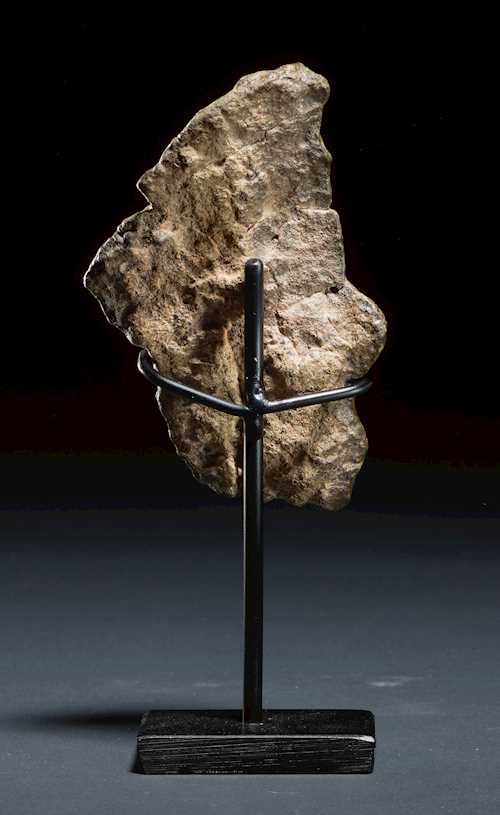
Lotto 4069* - A211 Out of This World - martedì, 03. dicembre 2024, 17h00
MARTIAN METEORITE
Amgala 001
Saguia el Hamra, Western Sahara
Found in 2022
Tested and analysed by Dr Tony Irving, University of Washington
141.7 g
10 × 6.5 × 2.5 cm (measurements not including stand)
Saguia el Hamra, Western Sahara
Found in 2022
Tested and analysed by Dr Tony Irving, University of Washington
141.7 g
10 × 6.5 × 2.5 cm (measurements not including stand)
‘Mars tugs at the human imagination like no other planet. With a force mightier than just mere gravity, it attracts the eye to the shimmering red presence in the clear night sky’. John Noble Wilford
Named after the Roman god of war, Mars has long been associated with warfare and mysteries. The planet’s two moons, Phobos and Deimos, were named for two of the sons of Ares and Aphrodite, the counterparts of Mars and Venus in Greek mythology.
A Martian meteorite is a rock that formed on Mars and was ejected with a minimal speed of 5 km per second from the planet by an impact event, for example from an asteroid. It then traversed interplanetary space for many hundreds of thousands of years before landing on Earth. As of October 2024, only 391 meteorites had been classified as Martian, less than half a percent of the over 83,000 meteorites that have so far been classified.
These meteorites are known as Martian because they have elemental and isotopic compositions that are similar to rocks and atmospheric gases on Mars, which have been measured by orbiting spacecraft, surface landers and rovers.
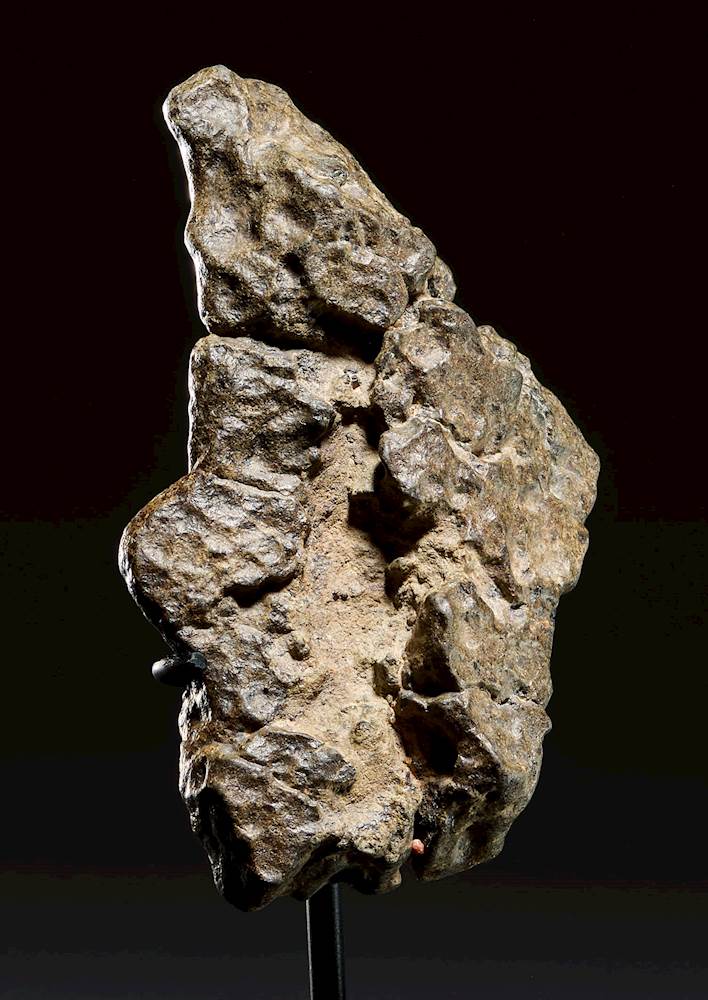
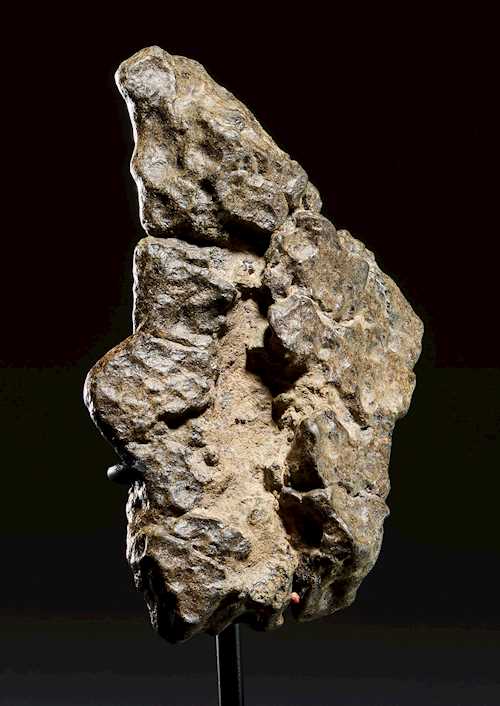
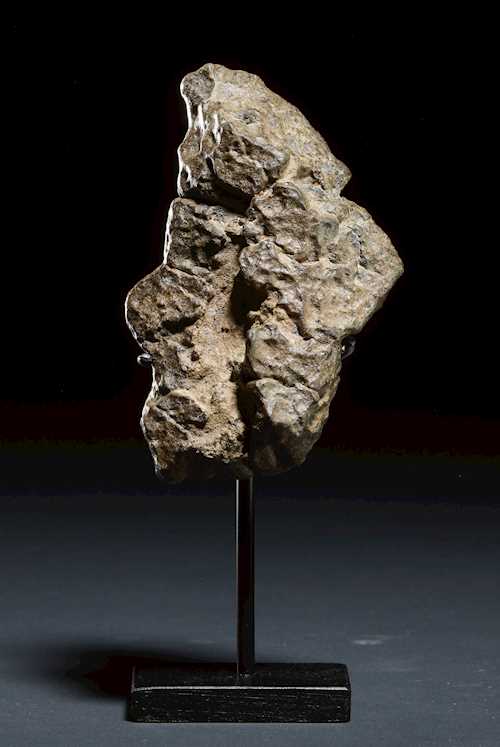
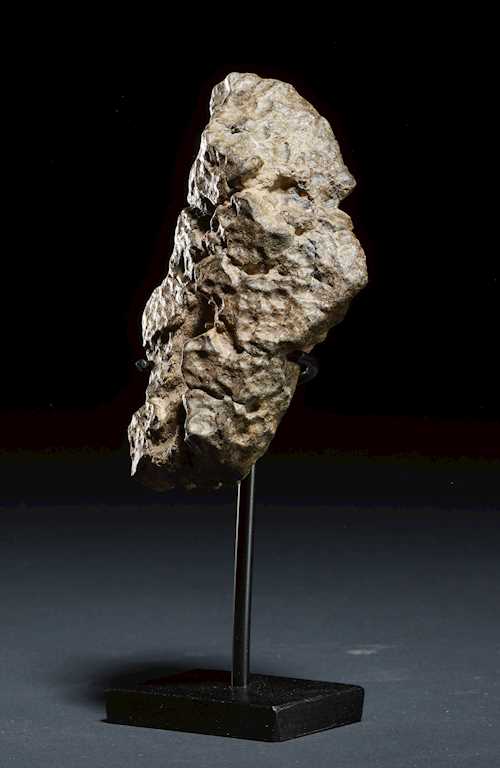
The Martian specimen presented here has a beautiful oval shape and smoky colour – a fascinating piece of the elusive and mysterious planet Mars that has travelled through time and space.
CHF 15 000 / 18 000 | (€ 15 460 / 18 560)
Venduto per CHF 18 750 (incl. premio)