

Lotto 1011* - A214 Works of Art & Decorative Arts - giovedì, 18. settembre 2025, 13h30
PENDANT - former Kofler-Truniger collection
Fatimid, ca. 12th century AD.
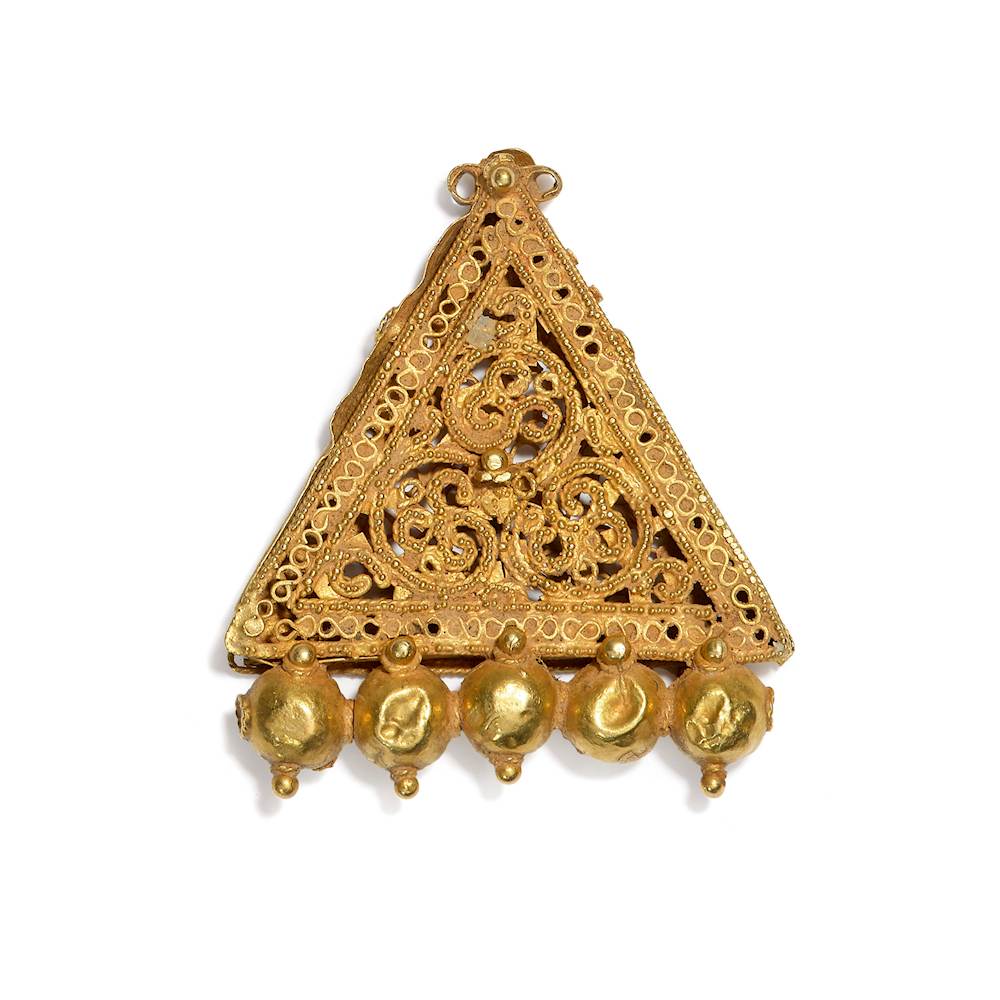
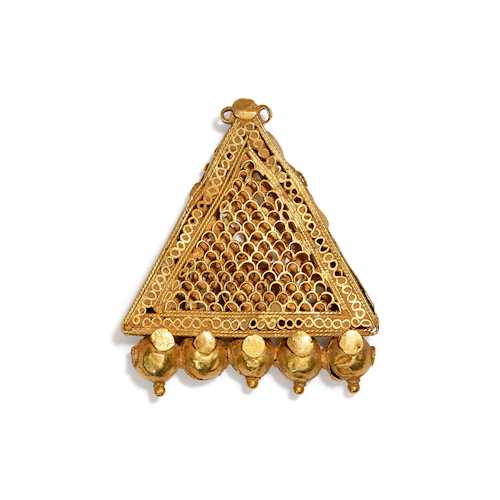
Two perforated gold plates in a triangular shape. One side is crafted from gold filigree wires in the shape of three scrolls, the other side features an openwork fish scale pattern. The bottom is finished with five larger gold beads.
H 3.2 cm, L 2.9 cm. Total weight 5.2 g.
Minimal losses and chips. Some parts bent.
Provenance:
- Swiss private collection, Lucerne, acquired from the above in ca. 1974.
- By inheritance in the same Swiss family collection, Lucerne.
Exhibited:
Literature:
Cf. Christie's auctions (May 1, 2025, lot 21) for an earring from the same collection, the Kofler-Truniger Collection.
Fatimid jewelry captivates with its exceptionally fine filigree and gold wire work, often embellished with granulated beads and sometimes complemented by colored enamel cloisonné. Particularly impressive is the artistic craftsmanship of the twisted wires and tiny gold beads, which display astonishing attention to detail. Preferred shapes are the crescent moon or pylons, which create an additional three-dimensional effect. During the Fatimid period (909–1171), both men and women wore precious jewelry, which probably served not only decorative purposes but also had symbolic or protective functions.
Numerous design elements of Fatimid goldsmithing found further use in later Islamic cultures. As early as the 10th century, cell enamel techniques and filigree goldwork from the Fatimid region found their way into Umayyad Spain (711–1031) and also had a demonstrable influence on jewelry from the Nasrid period (1232–1492). At the same time, the Seljuks in Iran (ca. 1040–1157) developed similar forms of jewelry with gold filigree, granulation, and bird and arabesque motifs. The luxurious style of these pieces of jewelry was apparently very popular across cultural boundaries in the Middle Ages.
CHF 5 000 / 8 000 | (€ 5 150 / 8 250)
Venduto per CHF 5 750 (incl. premio)