
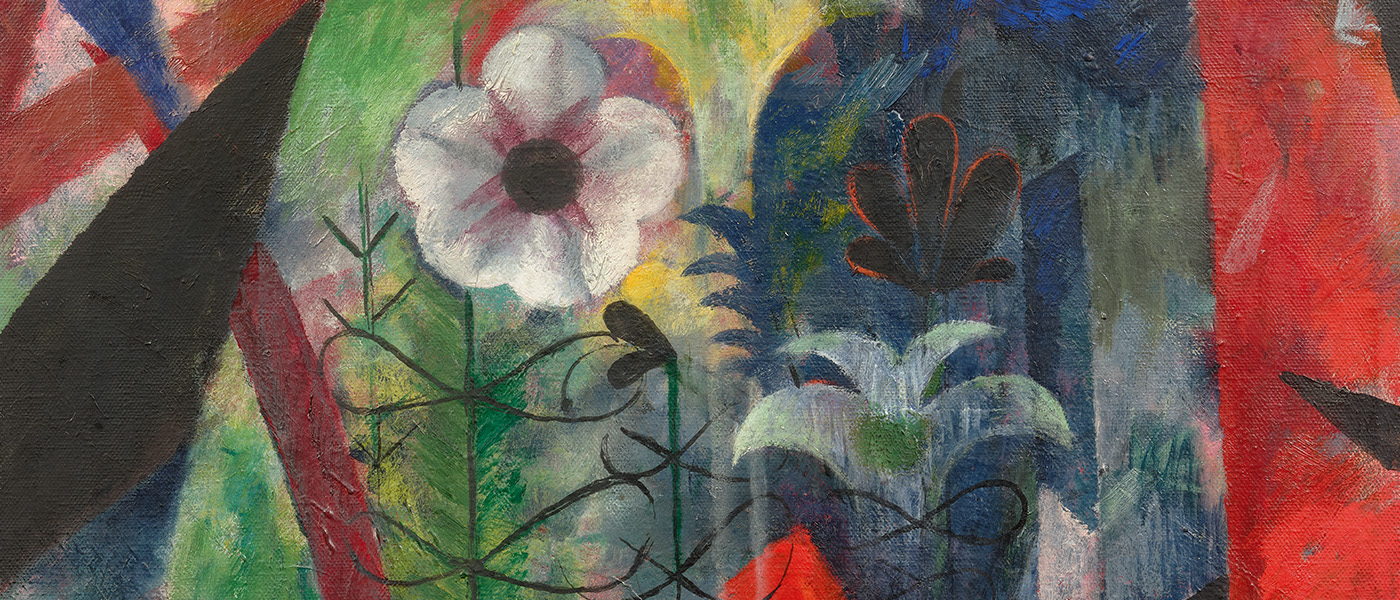
The path to
Expressionism
Preview of the Impressionist & Modern Art auction on 26 June 2026
Three paintings, all created in the closing years of World War I, will be presented in our June auction. Marianne von Werefkin and Gabriele Münter were friends, who summered together for many years in Murnau, an idyllic village at the foot of the Bavarian Alps. There with their partners, Alexej Jawlensky and Wassily Kandinsky, they painted together and exchanged ideas and techniques. Both relationships eventually ended badly, but they would indelibly shape the future of modern art.
Münter, who was fascinated with the art of French painters such as Matisse, Gaugin and Van Gogh, was struggling as a young artist to paint as quickly as she needed to express herself spontaneously. Kandinsky taught her to use a palette knife to achieve the speed she desired. In return, Münter pushed Kandinsky towards the expressionist abstraction that would become the hallmark of his work.
It was the exchange of ideas between these four artists, particularly Werefkin’s, that would lay the groundwork for German Expressionism. Later, Franz Marc would reveal that it was primarily Werefkin and Jawlensky who opened his eyes to the possibilities of Expressionism.
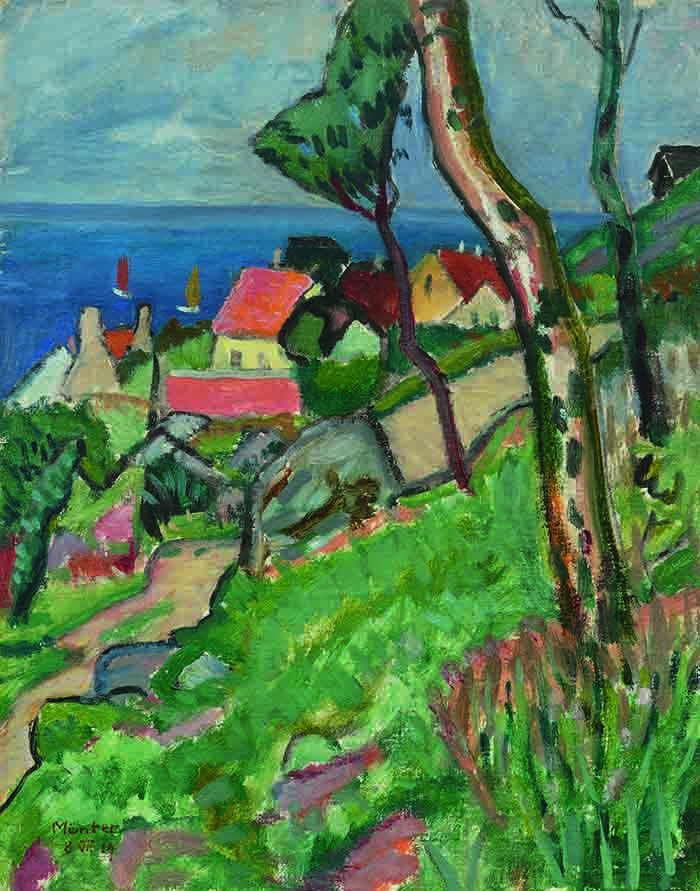
Gabriele
Münter
Gudhjem. 1919.
Oil on canvas. 39.2 × 31 cm.
Estimate: CHF 120 000/200 000
© 2025, ProLitteris, Zurich
Heinrich Campendonk first had contact with the group in 1909, through the Neue Künstler Vereinigung München (N.K.V.M.), an idea born of discussions amongst Werefkin, Münter, Kandinsky and Jawlensky. In 1911, as a young man of 20, Campendonk participated in the formation of the Blaue Reiter, of which all four artists were also founders. Campendonk was mentored by the older members, especially Franz Marc.
By 1918/19, when these three works were created, the lives of all three artists had changed dramatically. Campendonk’s mentors Franz Marc and August Macke were both killed at the front during the war. After Campendonk’s discharge from the army in 1915 due to illness, he moved with his family to Seeshaupt, very close to Murnau. There he continued to paint, ever influenced by his fellow artists of the Blaue Reiter, but taking his own personal direction.
Marianne
von Werefkin
Landscape. 1919.
Tempera on paper on board.
55.5 × 73 cm.
Estimate: CHF 80 000/120 000
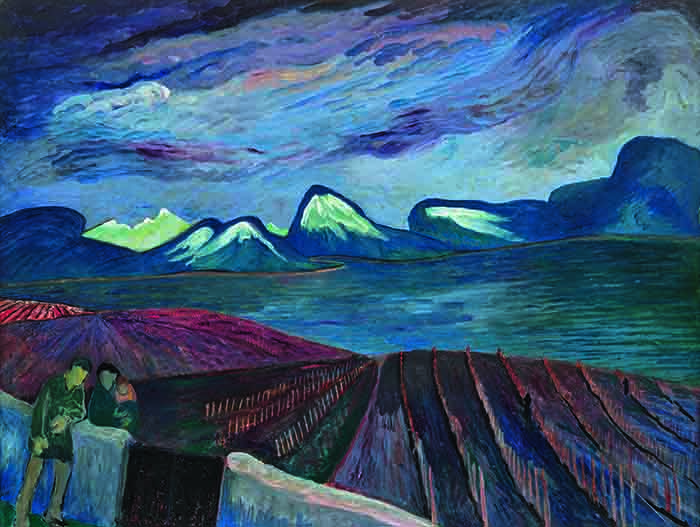
Marianne
von Werefkin
Ticino Landscape. 1919.
Tempera on paper on board.
55.5 × 73 cm.
Estimate: CHF 80 000/120 000
Münter and Kandinsky’s relationship began to deteriorate around 1913, and Kandinsky returned to Russia, eventually marrying Nina Nikolaevna Andreevskaya in 1917. Münter spent the war years in Scandinavia, and continued to work, in a style somewhat surprisingly imbued with hope, as in the view presented here, with its cheerful colours and patch of bright blue sea.
Werefkin and Jawlensky fled Germany to Switzerland at the outbreak of World War I. They eventually settled in Ascona, where Werefkin painted the work in our June auction, ‘Landschaft’. This was during her last, difficult years together with Jawlensky, before he returned to Germany to marry her housekeeper.
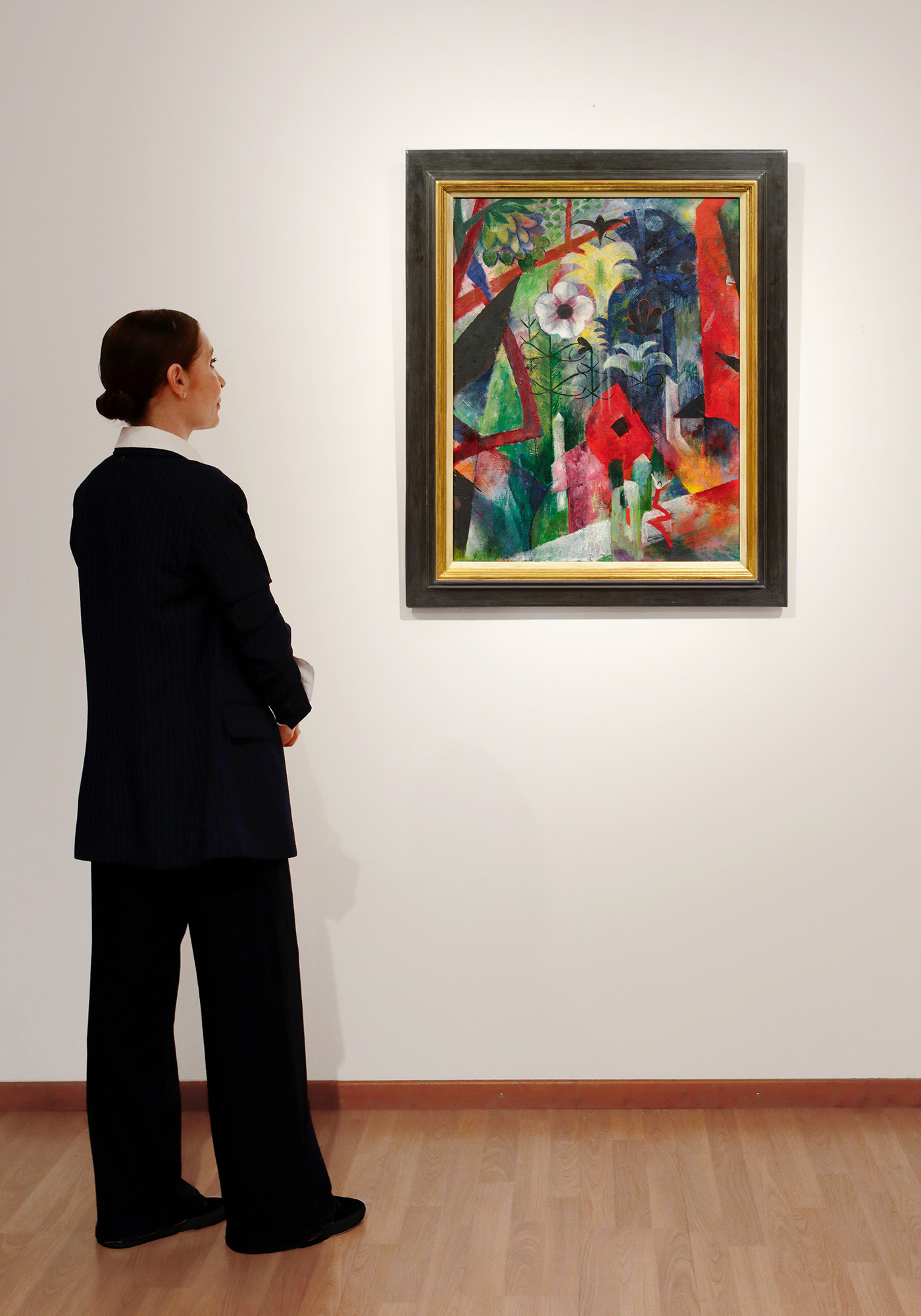
Heinrich
Campendonk
Blumenbild, c. 1918. Verso: Couple.
Oil on canvas. 76.8 × 60.7 cm.
Estimate: CHF 450 000/700 000
© 2025, ProLitteris, Zurich
OTHER HIGHLIGHTS
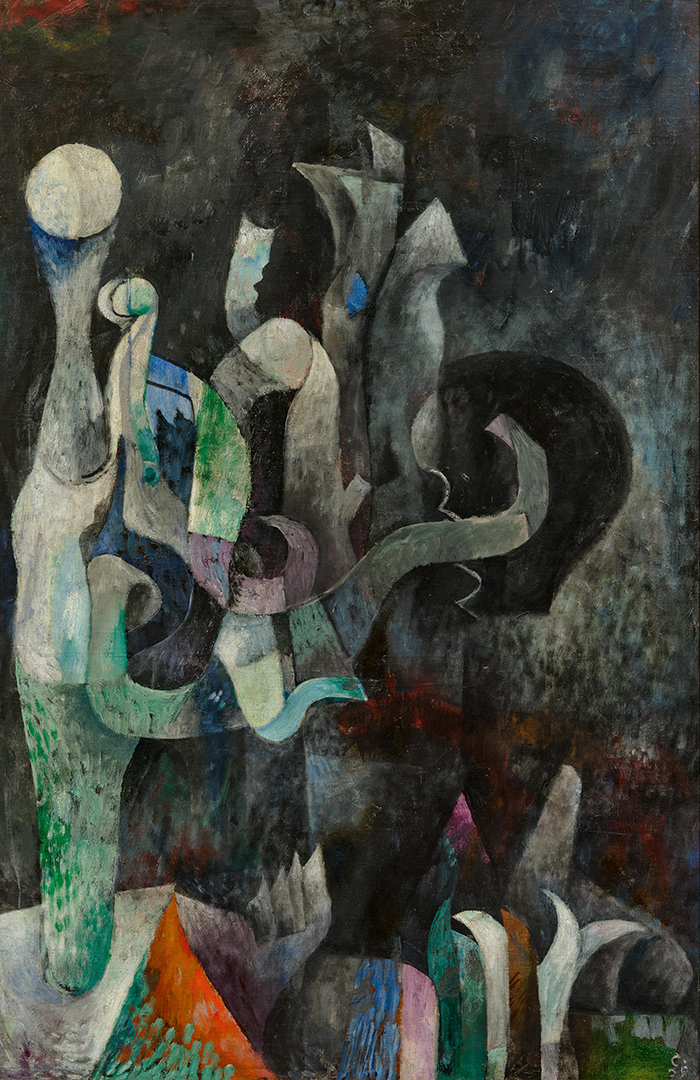
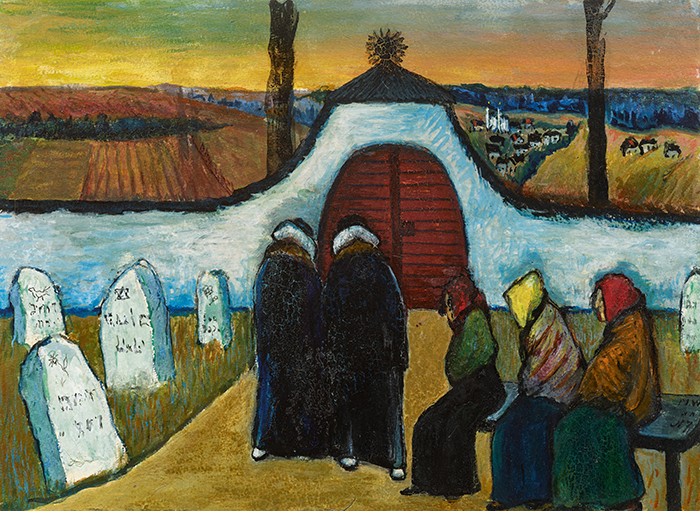
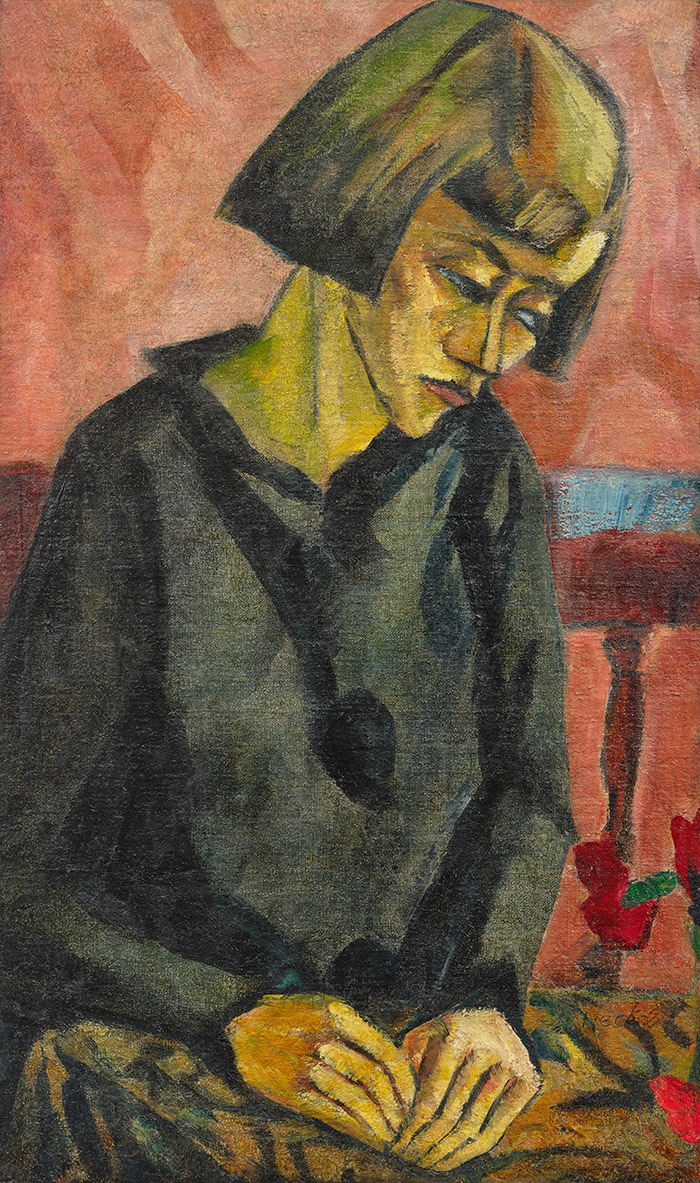
HEINRICH
CAMPENDONK
Vegetable composition. 1928.
Oil on canvas. 95,5 × 62,8 cm.
Estimate: CHF 80 000/120 000
© 2025, ProLitteris, Zurich
MARIANNE VON
WEREFKIN
Dusk.
Tempera on paper mounted on cardboard.
25.7 × 34.7 cm.
Estimate: CHF 40 000/60 000
ERICH
HECKEL
Woman at table (Siddi Heckel). 1914.
Oil on canvas. 64 × 38,5 cm.
Estimate: CHF 100 000/150 000


CONTACT FOR
ENQUIRIES AND
CONSIGNMENTS:
JARA KOLLER
Head of DepartmentImpressionist & Modern Art
jara.koller@kollerauktionen.com
+41 44 445 63 08