
Planetary landscape
Preview of the Swiss Art auction on 26 June 2026
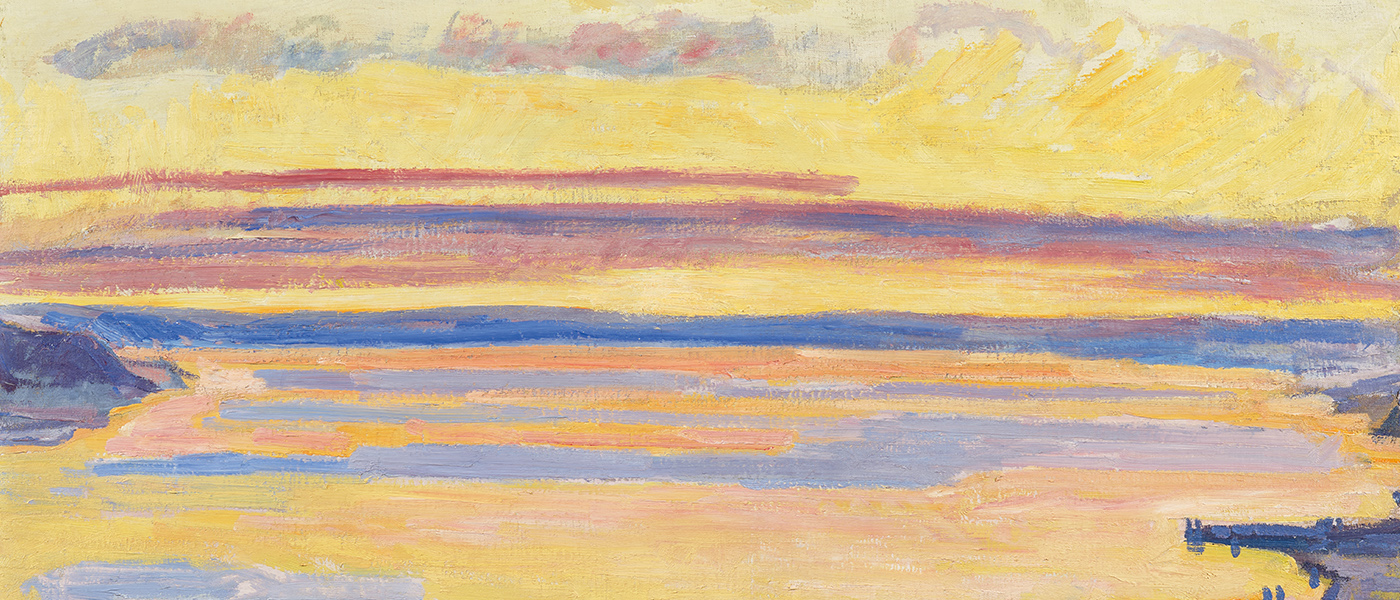
Ferdinand Hodler’s late landscapes rank among the most radical pictorial inventions of European Modernism. Painted in 1917, ‘Sunset over Lake Geneva from Caux’ exemplifies the way in which, during the final years of his life, the artist moved away from contour-defined painting and assigned the central role within the composition to colour. Hodler himself described this development with remarkable candour in October 1917: for him, form no longer determined colour; rather, form only began to live through colour. In this insight lies the key to his late work.
Warm shades of rose, blue, violet and gold flow through sky and lake in finely nuanced transitions. The horizons begin to shimmer, shorelines lose their solidity, and the boundaries between water, atmosphere and light appear to almost dissolve. All anecdotal detail disappears in favour of a concentrated pictorial rhythm that draws the gaze into the distance while simultaneously creating a peculiar stillness. The composition appears both monumental and immaterial. As though under a silent cosmic tension, the surface of the lake expands to the very edges of the picture. The viewer no longer confronts a view of nature, but rather a vision that seems to transcend time and space.
The painting was created in Caux above Lake Geneva, where Hodler worked during the late summer of 1917. The elevated view across water, shoreline and sky recalls earlier scenes from Chexbres, yet the depiction now distances itself from topographical representation. The artist condenses the landscape into a vast, breathing mass. Nature no longer appears as a describable place, but as a spiritual realm.
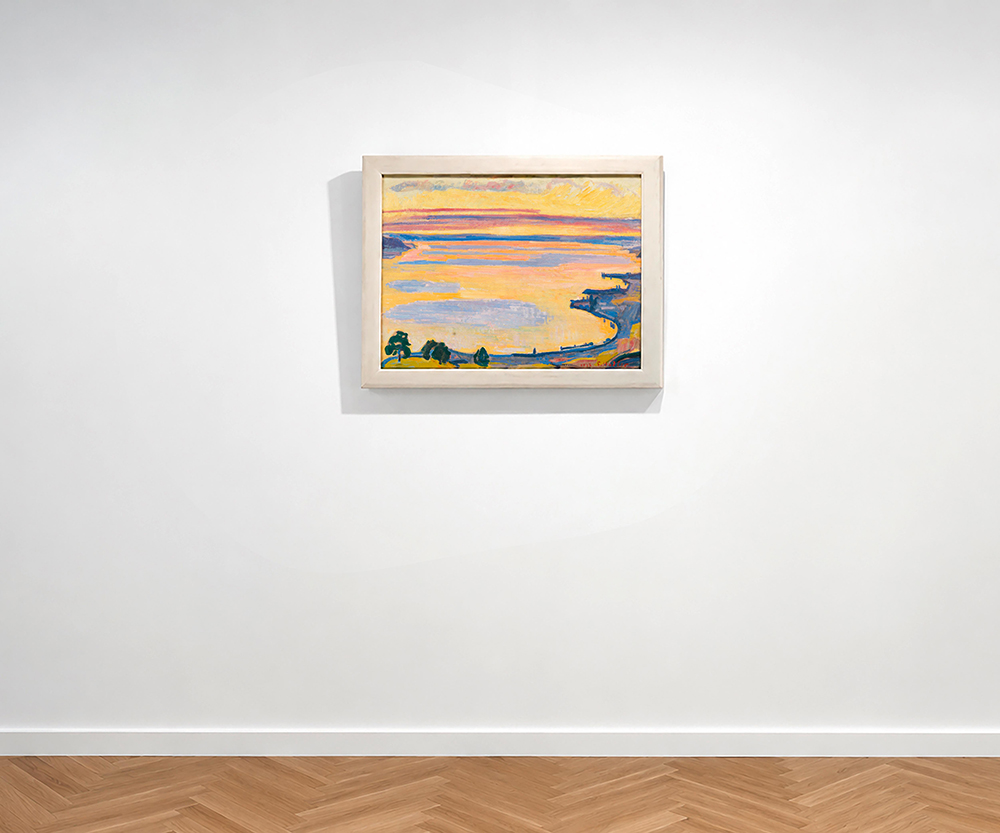
Ferdinand
Hodler
Sunset on Lake Geneva from Caux. 1917.
Oil on canvas. 60 × 80 cm.
Estimate: CHF 3 000 000/4 500 000
For these final works, Hodler coined the term ‘planetary landscape’. By this he meant a form of painting that transcends the visible and attributes a universal order to nature. The recurring horizontals, the layering of colour planes and the almost weightless equilibrium of the composition lend the painting a cosmic dimension. In doing so, Hodler opened the path towards a conception of painting that no longer places the object at its centre, but rather perception, rhythm and sensation.
The work was painted only a few months before Hodler’s death, and for this reason too it possesses a particular poignancy. Freed from every representative gesture, the artist concentrates on the essential and creates a vision of landscape that is at once memory, experience of nature and meditation on infinity.
OTHER HIGHLIGHTS
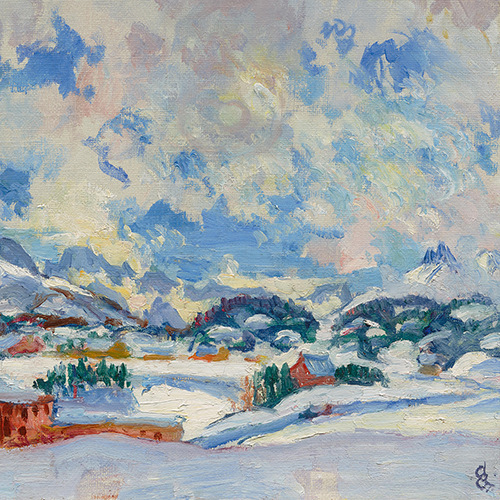
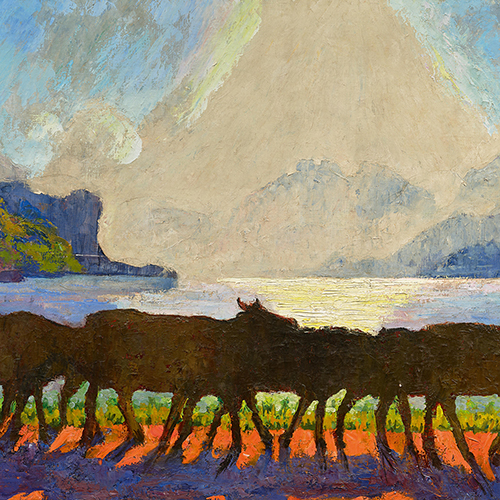
Giovanni
Giacometti
Maloggia inverno. 1927.
Oil on canvas. 23,5 × 24,5 cm.
Estimate: CHF 50 000/80 000
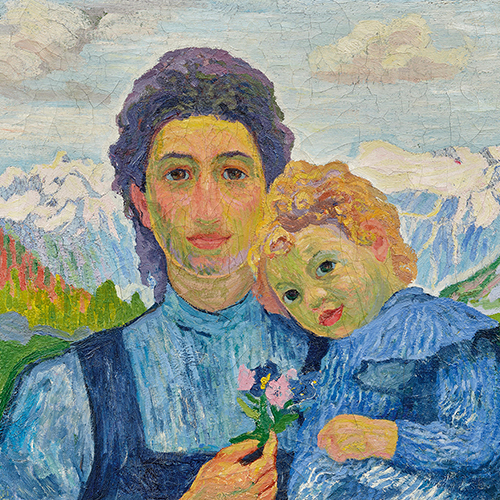
Giovanni
Giacometti
Annetta and Alberto, c. 1904.
Oil on canvas. 50 × 52 cm.
Estimate: CHF 300 000/400 000
Giovanni
Giacometti
Mattino d'estate a Maloggia. 1927.
Oil on canvas. 100 × 108 cm.
Estimate: CHF 200 000/300 000


CONTACT FOR
ENQUIRIES AND
CONSIGNMENTS:
LAURA KOLLER
Head of DepartmentSwiss Art
lkoller@kollerauktionen.ch
+41 44 445 63 51