
Albert Anker:
social revolutionary
Preview of the Swiss Art auction on 26 June 2026
Vincent Van Gogh wrote to his brother Theo in 1883, ‘Is Anker still alive? I often think about his work; I find it so proficient and delicately interpreted. He truly is one of the old school...’.
Albert Anker has often been characterised as ‘old school’, and not always in the admirative tone that Van Gogh employed. But when one looks past the initial impression of a simple, idealised rendering of country life, the artist’s singular devotion to a progressist and egalitarian society becomes evident.
Anker worked throughout his life to improve the lot of all Swiss people, and was convinced that this begins with the young – by improving education. He worked tirelessly to promote the establishment and improvement of schools in his rural village of Ins. He was in favour of learning for both girls and boys.
Albert
Anker
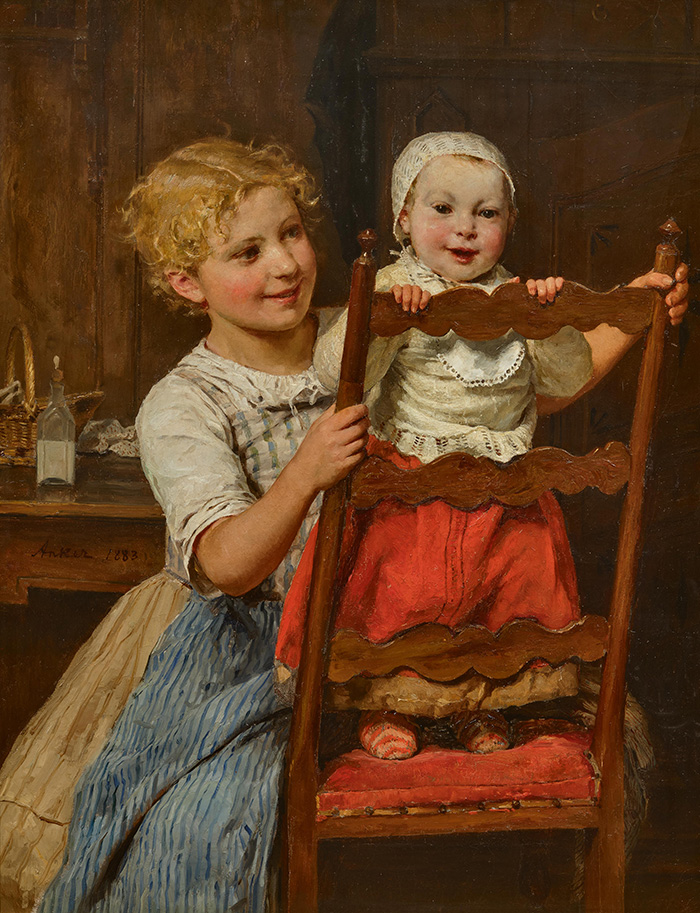
The little brother. 1883.
Oil on canvas. 72 × 56.5 cm.
Estimate: CHF 1 500 000/2 500 000
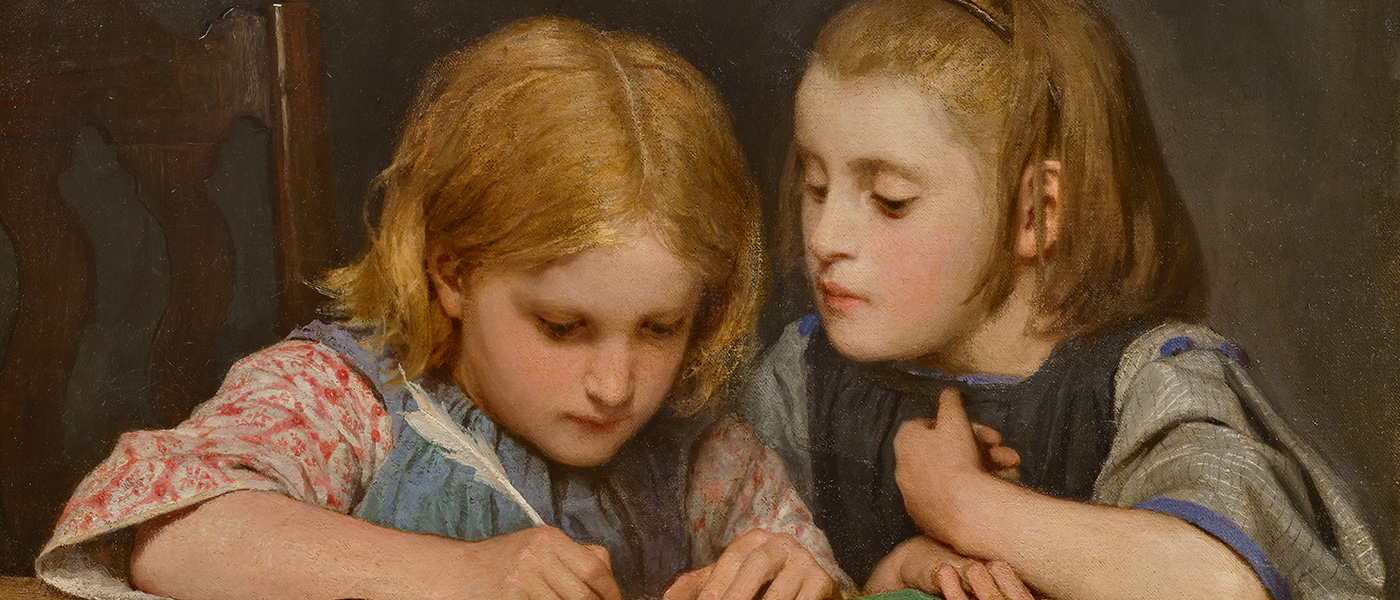
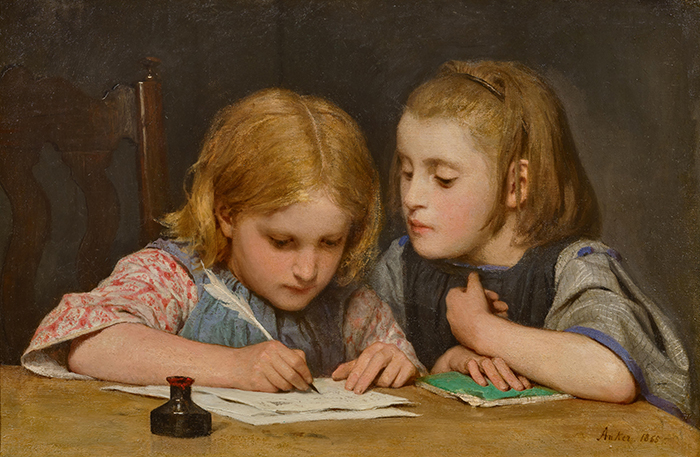
This can be seen in ‘Schreibunterricht II’ (Reading Lesson II), which depicts two young girls concentrated on their reading lesson. The ingenuousness with which Anker portrays this scene belies the counter-culture message behind it: in order to create a better society, women should be educated, too. When the painting won the gold medal at the Paris salon in 1866, a Swiss newspaper published a version of it above the caption: ‘The Little Bluestockings’, a term which by then had taken on a negative connotation, signifying the futility of allowing women to become educated.
Albert
Anker
Schreibunterricht II. 1865.
Oil on canvas. 51 × 78 cm.
Estimate: CHF 600 000/900 000
Albert
Anker
Schreibunterricht II. 1865.
Oil on canvas. 51 × 78 cm.
Estimate: CHF 600 000/900 000
Not all of Anker’s paintings were aimed at social improvement, but practically all of them were a form of social commentary. His works often celebrate children simply in the joy or the intensity of the moment, such as in ‘Der kleine Bruder’ (The Little Brother). With a regard, an expression – in the tradition of Baroque portraitists such as Rembrandt, Hals and Velazquez – Anker manages to reveal the mind of his subjects. The young child, eyes wide and flashing with a mischievous glint, brings us back to the time in our lives when everything was new, fascinating, to be explored. The gaze of his sister, at once amused and protective, speaks volumes, and creates an atmosphere which is at once a snapshot of a moment and an homage to the bonds that can unite a family.
OTHER HIGHLIGHTS

ROBERT
ZÜND
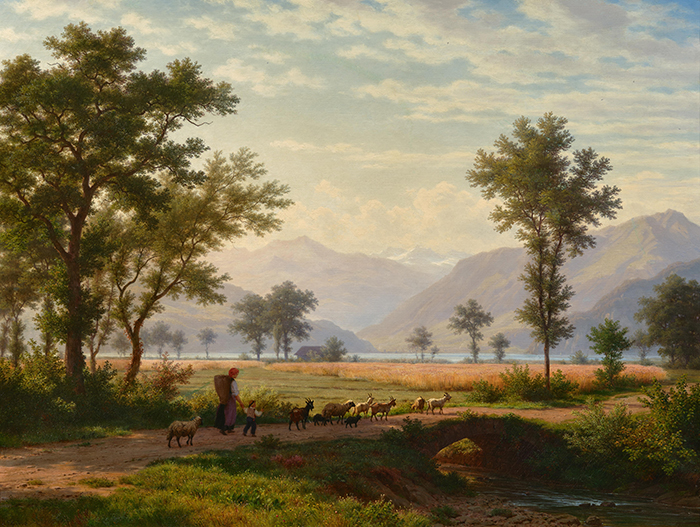
On the Lake of Four Cantons.
Oil on canvas. 60 × 80 cm.
Estimate: CHF 80 000/120 000
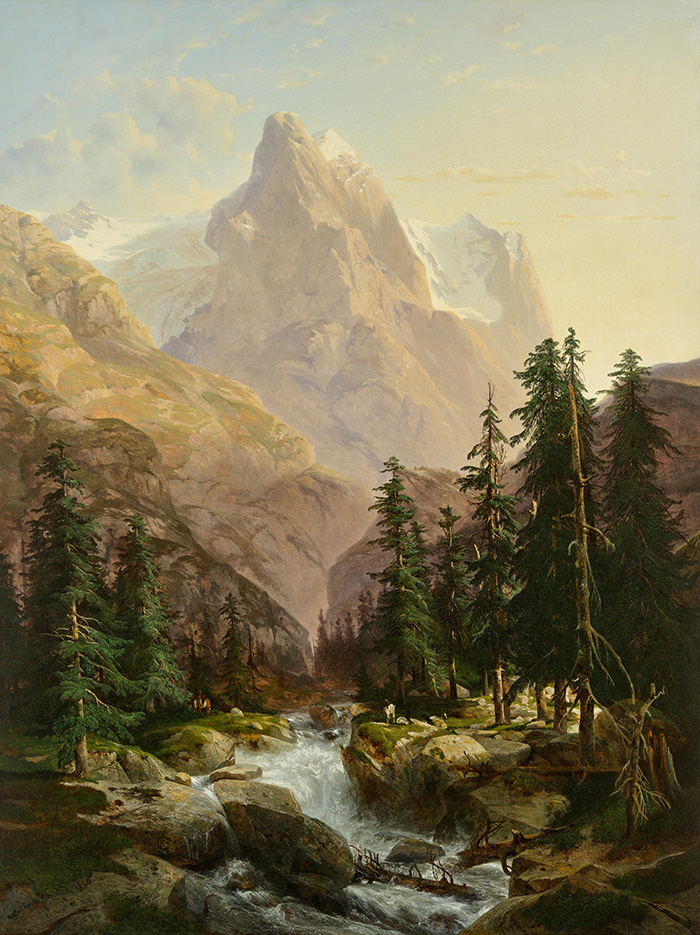
ALEXANDRE
CALAME
Wetterhorn. 1840.
Oil on canvas. 130 × 98 cm.
Estimate: CHF 35 000/55 000
ROBERT
ZÜND
Woodland scene with deer by the river.
Oil on canvas. 61 × 81 cm.
Estimate: CHF 60 000/100 000


CONTACT FOR
ENQUIRIES AND
CONSIGNMENTS:
LAURA KOLLER
Head of DepartmentSwiss Art
lkoller@kollerauktionen.ch
+41 44 445 63 51