
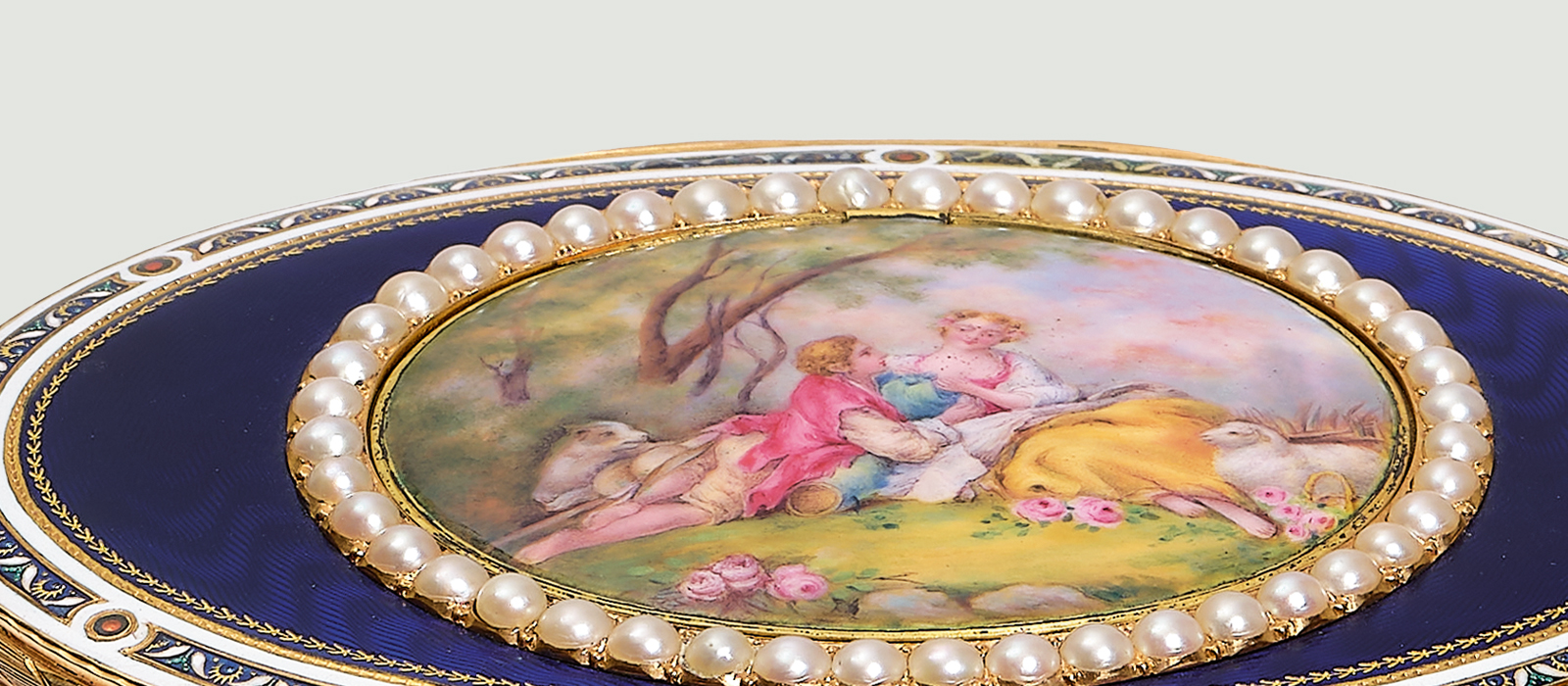
18TH-CENTURY TREASURES
PREVIEW OF THE WORKS OF ART & DECORATIVE ARTS, OLD MASTER PAINTINGS & DRAWINGS AUCTIONS ON 17 & 18 SEPTEMBER 2026
INGENIOUS
MECHANISM
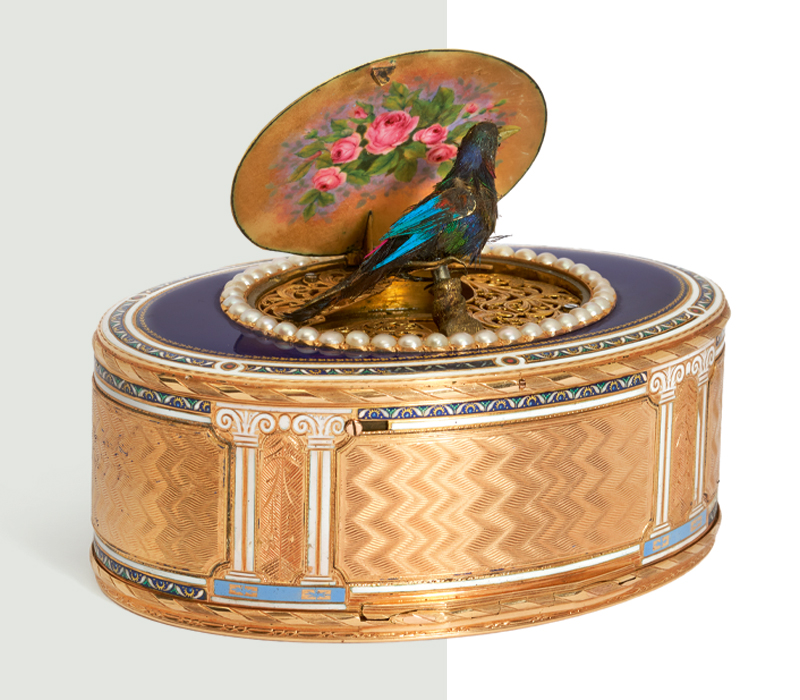
In the 17th and 18th centuries, the keeping and training of canaries was immensely popular. In the late 18th century, living birds were rivalled by a sophisticated mechanism developed by Pierre Jaquet-Droz and his son Henri-Louis. For the first time, this ingenious technology reproduced birdsong with remarkable naturalism.
A gold and enamel singing-bird box
Geneva, ca. 1790. Signed Jaquet-Droz & Leschot London
Oval gold box, engine-turned and engraved. 8.7 × 6 × 4 cm
Estimate: CHF 80 000/140 000
MUSIC TO
BOUCHER’S EARS
This portrait by François Boucher dates from a period in his life when musical instruments began to appear more frequently in his work, possibly inspired by his marriage in 1733 to the musician Marie-Jeanne Buzeau. This exceptionally charming painting must once have belonged to a discerning music lover, as its beautifully designed frame suggests.
François Boucher
A hurdy-gurdy player in a landscape, before 1740
Oil on canvas, 49.1 × 38.3 cm
Estimate: CHF 100 000/150 000
MUSIC TO
BOUCHER’S EARS
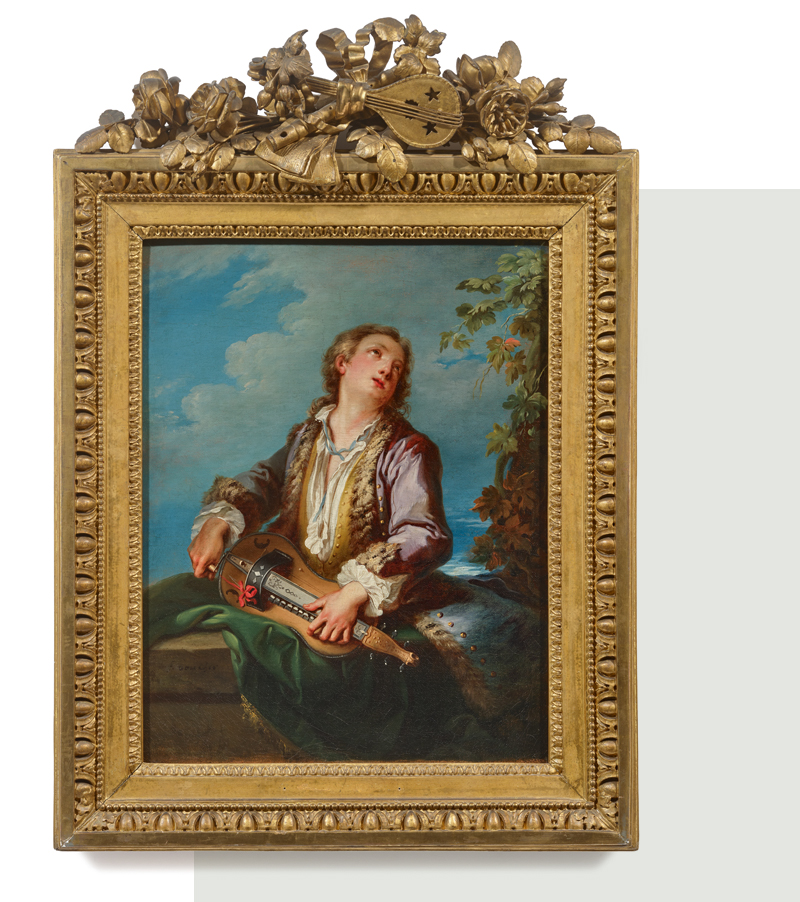
This portrait by François Boucher dates from a period in his life when musical instruments began to appear more frequently in his work, possibly inspired by his marriage in 1733 to the musician Marie-Jeanne Buzeau. This exceptionally charming painting must once have belonged to a discerning music lover, as its beautifully designed frame suggests.
François Boucher
A hurdy-gurdy player in a landscape, before 1740
Oil on canvas, 49.1 × 38.3 cm
Estimate: CHF 100 000/150 000
FURNITURE
GESAMTKUNSTWERK
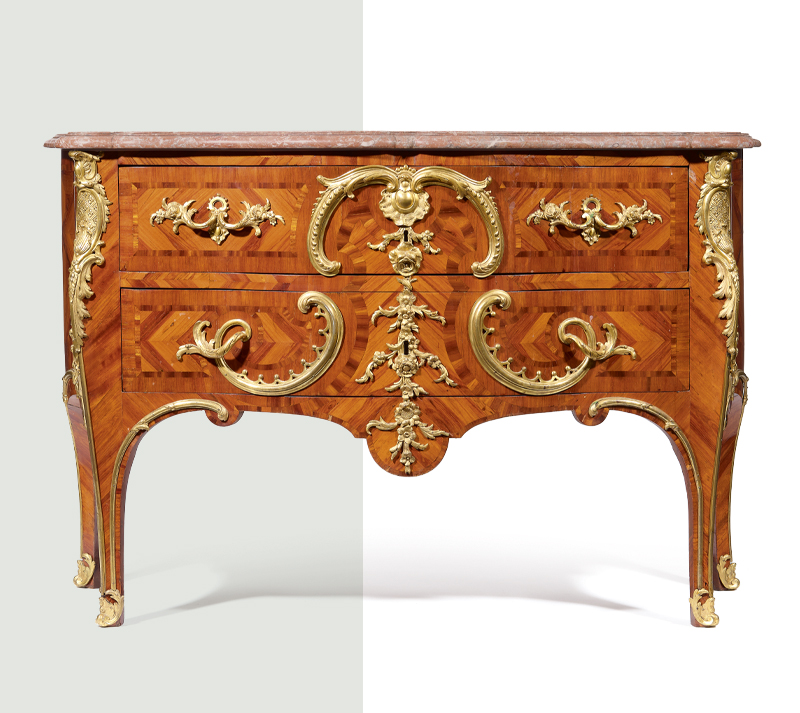
Charles Cressent is regarded as one of the pioneers of the Régence style and among the greatest cabinet-makers of his time. He most likely enjoyed a royal privilege that allowed him to circumvent the strict guild system and oversee every stage of furniture production within his own workshop, resulting in some of the most harmonious creations of the period.
A Louis XV commode, Paris ca. 1730/40
Charles Cressent
Tulipwood and kingwood, 132 × 64 × 83.5 cm
Estimate: CHF 30 000/50 000
STONES
AS ART
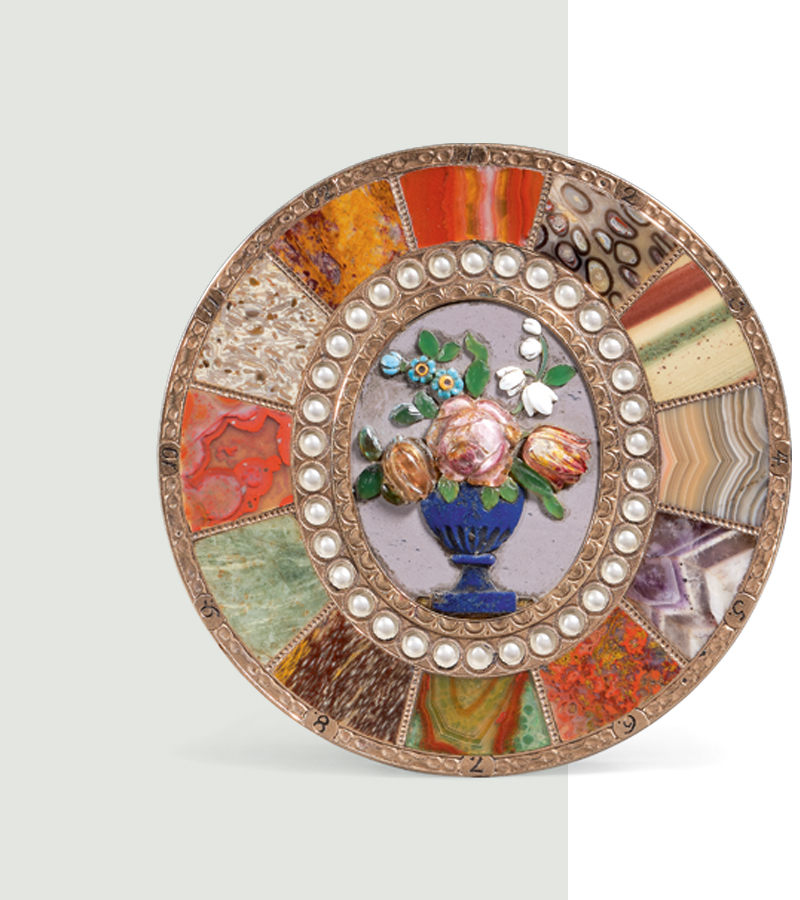
Johann Christian Neuber ranks among the most outstanding goldsmiths and jewellers of European Neoclassicism. He achieved particular renown for his 'Steinkabinett' boxes, composed of a multitude of precisely cut hardstones, elevating minerals from raw materials to works of art in their own right.
A ‘Steinkabinett’ bonbonnière
Dresden, ca. 1785/90. By Johann Christian Neuber
D 6.1 cm, H 2.1 cm
Estimate: CHF 100 000/180 000
STONES
AS ART
Johann Christian Neuber ranks among the most outstanding goldsmiths and jewellers of European Neoclassicism. He achieved particular renown for his 'Steinkabinett' boxes, composed of a multitude of precisely cut hardstones, elevating minerals from raw materials to works of art in their own right.
A ‘Steinkabinett’ bonbonnière
Dresden, ca. 1785/90. By Johann Christian Neuber
D 6.1 cm, H 2.1 cm
Estimate: CHF 100 000/180 000
REMAINS OF
THE DAY
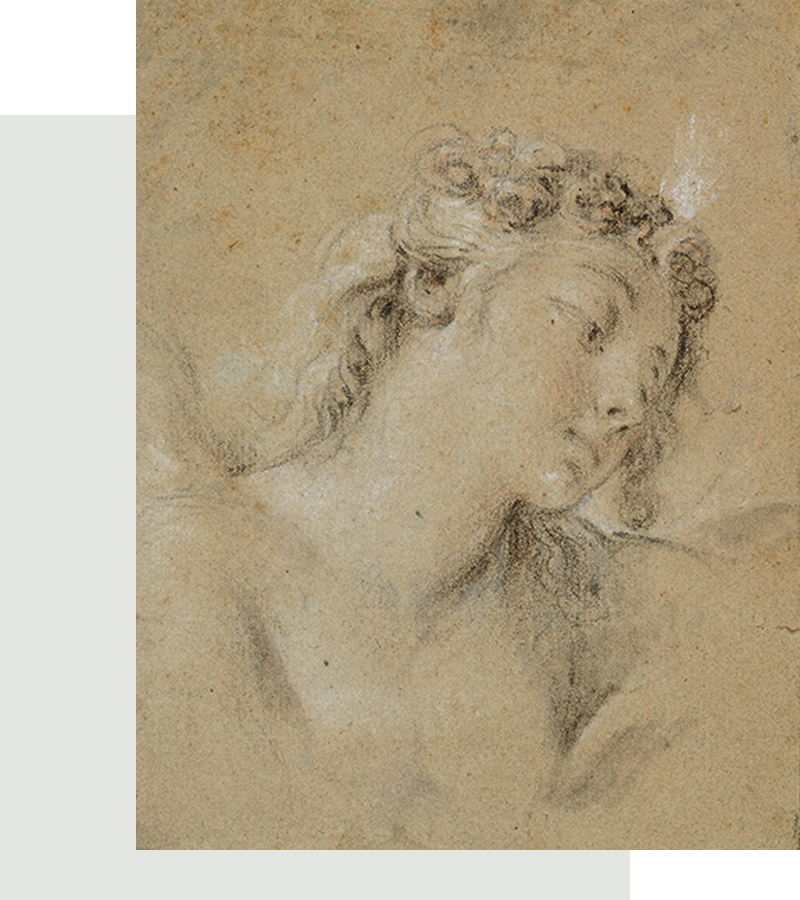
This newly rediscovered drawing by François Boucher was most likely a detailed study for one of his finest works, 'The Setting of the Sun', created for Madame de Pompadour circa 1750 and now in the Wallace Collection. Depicting Apollo departing from his lover Thetis at the end of the day, this drawing shows the artist at the height of his powers.
François Boucher
Study of the head of a young man, ca. 1750
Black, red and white chalk, 18.4 × 14.2 cm
Estimate: CHF 4 000/6 000
IMPERIAL
GRATITUDE
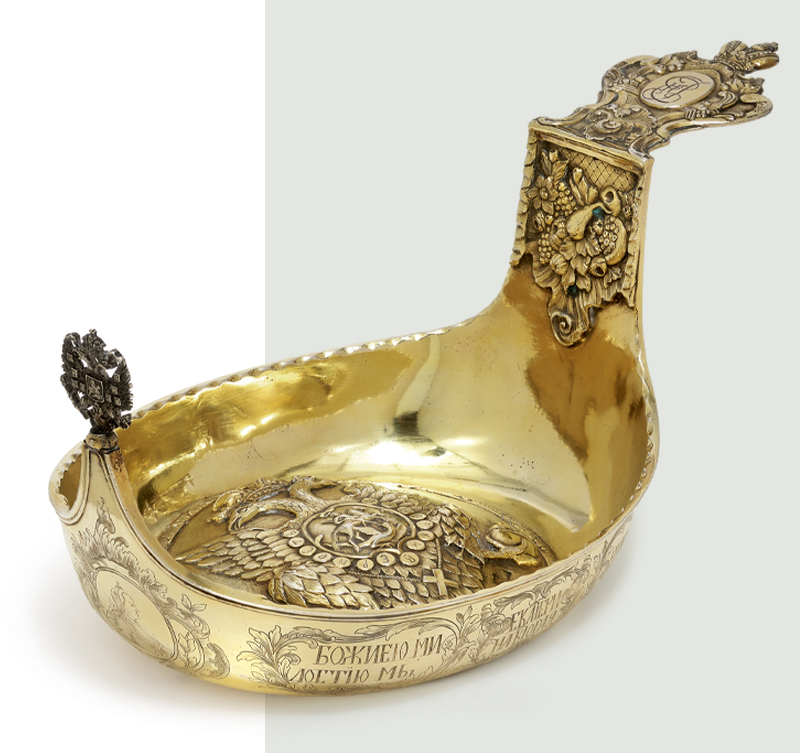
This silver kovsh, bearing the Imperial double eagle, was presented by Empress Catherine the Great to the commander of a Cossack regiment. Catherine II established mounted Cossack units as part of the Imperial Guard, and the gift of this precious drinking vessel may well have recognised his distinguished service.
A silver-gilt kovsh
Moscow, 1762, maker’s mark Yakov Maslennikov
L 30 cm, H 11.7 cm, 525 g
Estimate: CHF 25 000/35 000
IMPERIAL
GRATITUDE
This silver kovsh, bearing the Imperial double eagle, was presented by Empress Catherine the Great to the commander of a Cossack regiment. Catherine II established mounted Cossack units as part of the Imperial Guard, and the gift of this precious drinking vessel may well have recognised his distinguished service.
A silver-gilt kovsh
Moscow, 1762, maker’s mark Yakov Maslennikov
L 30 cm, H 11.7 cm, 525 g
Estimate: CHF 25 000/35 000


CONTACT FOR
ENQUIRIES AND
CONSIGNMENTS:
STEPHAN KOLLER
Head of DepartmentFurniture & Decorative Arts
skoller@kollerauktionen.ch
+41 44 445 63 41

