

AN IDEAL OF BEAUTY:
THE BARTHOLONI VENUS
PREVIEW OF THE WORKS OF ART AUCTION ON 26 MARCH 2026
The Venus in our Works of Art auction was created in the 2nd century CE. Owing to its particular physical shape, the Carrara marble torso is described as the ‘Knidian type’. The distinctive gentle S-curve derives from the Aphrodite of Knidos, created around 350 BCE. Its sculptor, Praxiteles, depicted the goddess completely nude for the first time, marking a milestone in ancient art. The fascination emanating from this key work reached its height during the Roman Imperial period, from which our Venus dates. Philosophers such as Cicero, Pliny the Elder and Lucian praised its ideal beauty. Greek and Roman sculptors adopted the celebrated model in all sizes and materials. With the spread of these replicas, the Greek Aphrodite became the Latin Venus, soon adorning private residences, public buildings and temples.
Not only the Bartholoni Venus itself is significant, but also its provenance, traceable back to the 19th century. The first documentation of the sculpture dates to Jean-François Bartholoni (1796–1881), a successful Parisian banker and pioneer of railway development in France and Switzerland. His family, orginally from Tuscany, had settled in Geneva in the 17th century. Bartholini’s close ties to Geneva and his Italian heritage are reflected in the construction of the Villa Bartholoni, today home to Geneva’s Musée d’Histoire des Sciences.
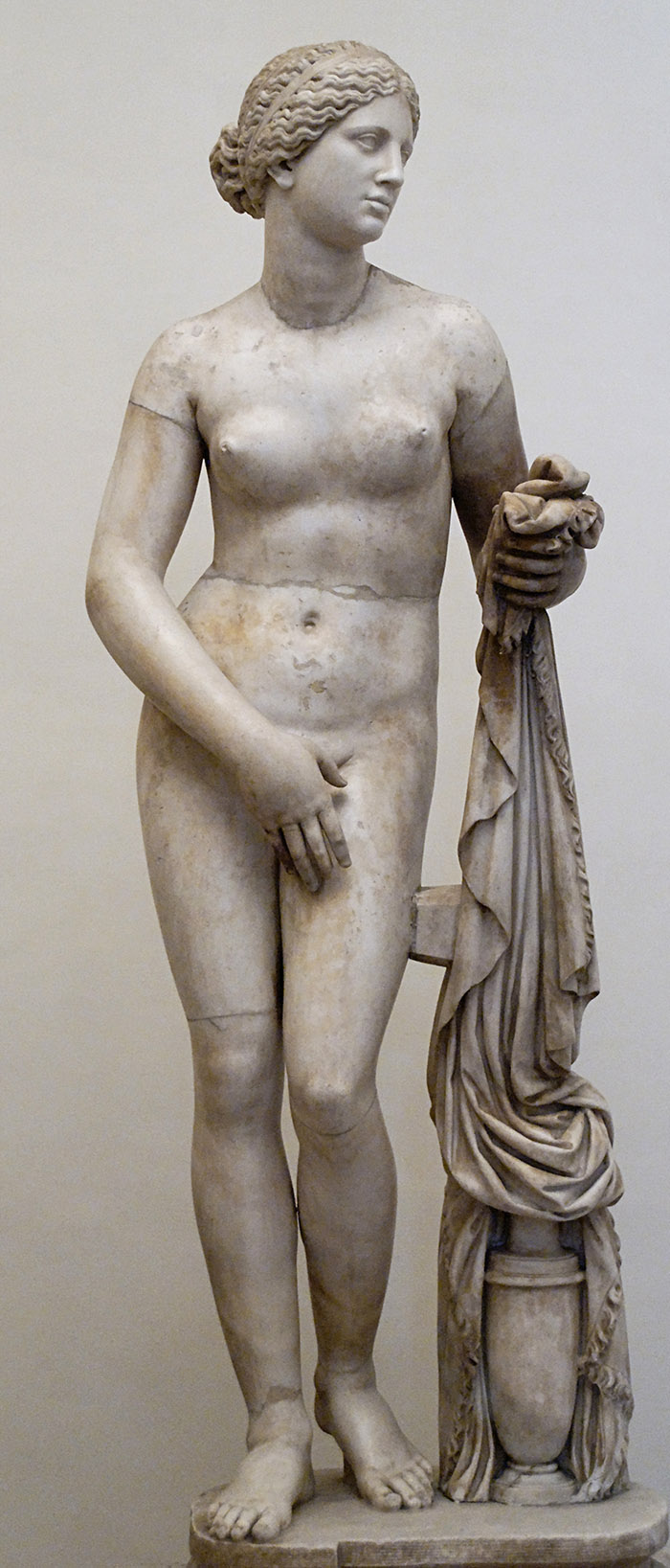
APHRODITE OF KNIDOS
FROM THE LUDOVISI COLLECTION
Roman marble copy of
a Greek model (torso and thighs)
with added head, arms,
legs, and drapery support
His son Charles built the Château Sans-Souci in Versoix between 1882 and 1884, and richly furnished it with sculptures, furniture, paintings, silver and other works of art. In 1926, Charles’s descendants sold the estate along with its contents.
The Venus reappeared at a Basel auction four years later. Whether it passed directly or indirectly into the collection of the Dutch antiquities collector Henri E. Smeets (1905–1980) remains unclear. Most recently, in 2023, the Bartholoni Venus was shown in the exhibition ‘The Awakened. The Ruins of Antiquity and the Birth of the Italian Renaissance’ at the Royal Castle in Warsaw.
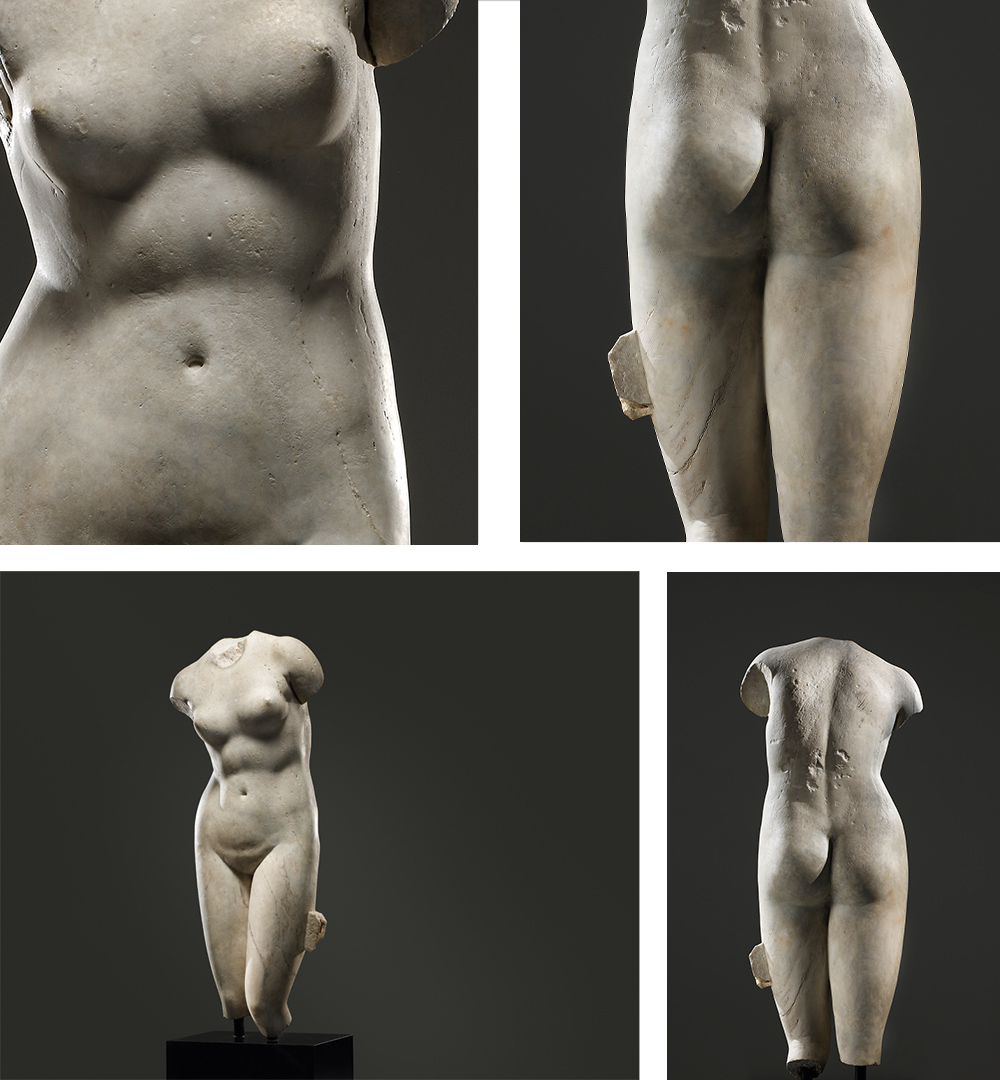
MARBLE TORSO OF
THE ‘BARTHOLONI’ VENUS
Roman, Imperial period,
circa 2nd century CE
Knidian type, Carrara marble
H 184 cm (with base)
Estimate: CHF 500 000/800 000


CONTACT FOR
ENQUIRIES AND
CONSIGNMENTS:
STEPHAN KOLLER
Head of DepartmentFurniture & Decorative Arts
skoller@kollerauktionen.ch
+41 44 445 63 41