
Lot 4072* - A211 Out of This World - Dienstag, 03. Dezember 2024, 17.00 Uhr
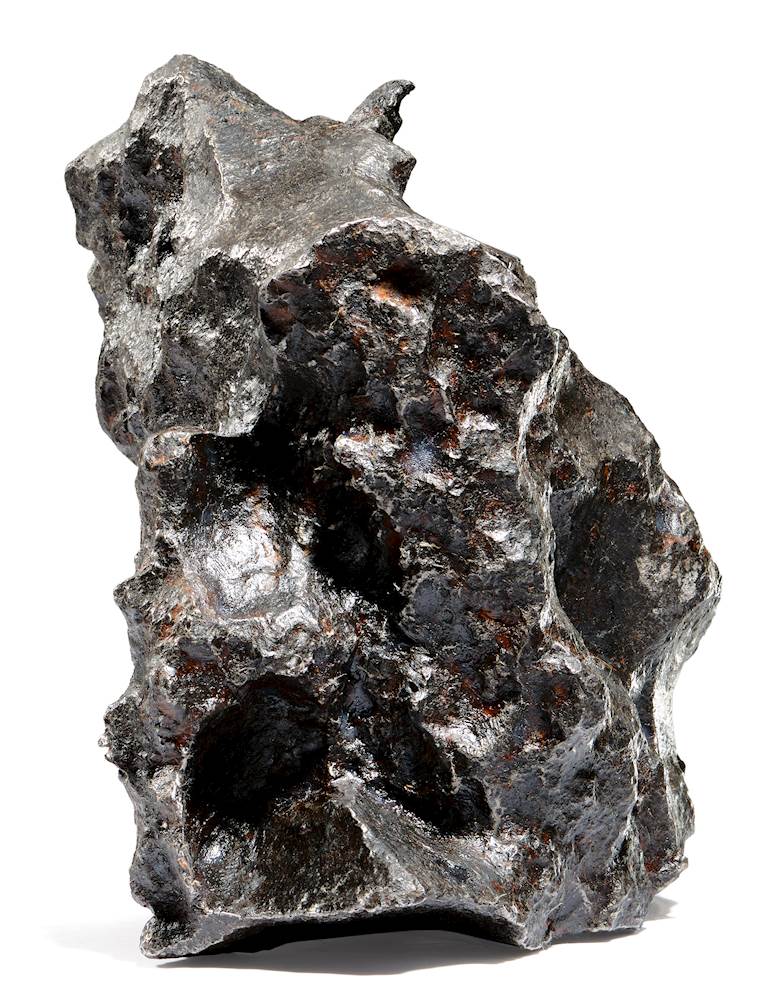
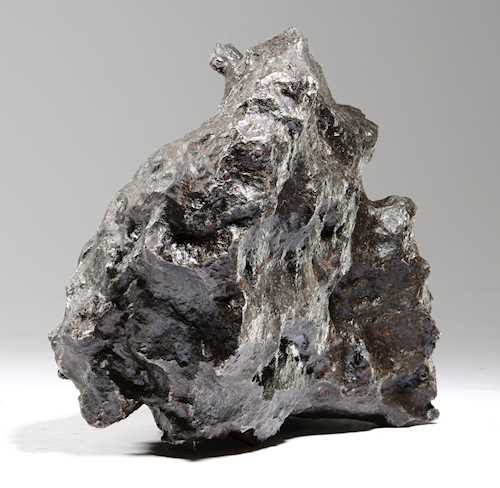
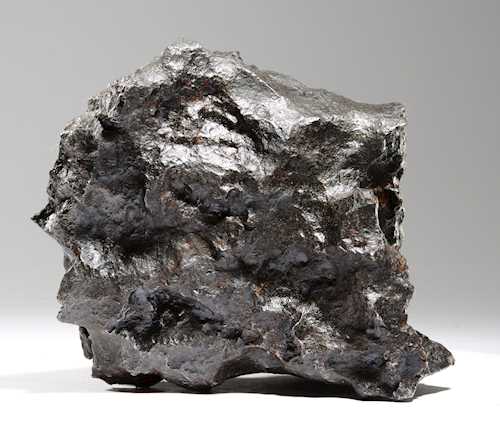
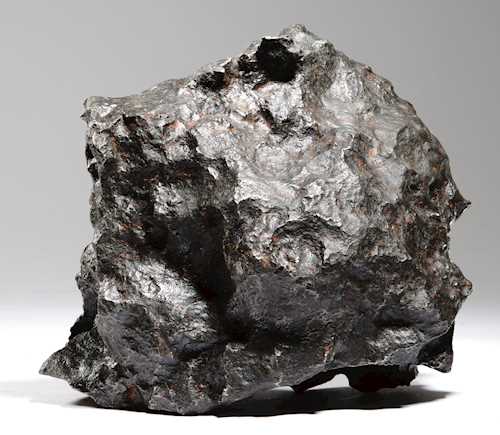
‘CAMPO DEL CIELO’ METEORITE
Campo del cielo
Gancedo, Argentina
Found in 1576
37.46 kg
30 × 25 × 18 cm
Gancedo, Argentina
Found in 1576
37.46 kg
30 × 25 × 18 cm
In 1576, the governor of a province in northern Argentina commissioned the military to search for a huge mass of iron, which he had heard that natives used for their weapons. The natives claimed that the mass had fallen from the sky in a place they called ‘Piguem Nonralta’, which the Spanish translated as ‘Campo del Cielo’, in English ‘Field of heaven’. The expedition found a large mass of metal protruding out of the soil. The samples which were taken that day were then long forgotten and meant to be of volcanic origin. Early in the 19th century, when scientists finally acknowledged, that stones and irons may fall from the skies, the Campo del Cielo iron was categorized as meteoritic iron. A large mass of this meteorite is currently in the collection of the Natural History Museum in London.
Later studies of the 26 craters which make up the Campo del Cielo crater field, suggested that a large body of circa 4 metres in diameter entered the Earth's atmosphere 4 200–4 700 years ago. As it passed through the atmosphere, it broke into many pieces. The age of this meteorite is 4.5 billion years old. This means that it formed as part of the development of our solar system and then travelled through space and time for billions of years.
This meteorite consists mainly of iron, with a small portion of nickel (10 %). It also shows a striking patina of ablations and dimples on its surface, which are regmaglypts that form on the surface of some meteorites as they pass through Earth’s atmosphere. They are probably formed by small vortices of hot gas carrying droplets of molten meteorite material that erode portions of the surface.
The exceptionally large piece of meteorite presented here has an exquisite, deep black colour, produced when it broke off from the main mass early in its descent and formed a beautiful dark fusion crust. This is a fascinating and highly collectable piece, which has seen the vastness of our solar system .
CHF 13 500 / 16 000 | (€ 13 920 / 16 490)
Verkauft für CHF 16 250 (inkl. Aufgeld)